INTERNATIONAL CONFERENCE

On Advanced Systems and Emerging Technologies


Conference Date : 6-7 November 2025

Organized By: Department of Computer Science and Engineering, Rayat Bahra University, Mohali, Punjab, India.

Venue : Rayat Bahra University, Mohali, Punjab, India.

About the Conference

The International Conference on Advanced Systems and Emerging Technologies (ICASET) 2025, is being organized at Rayat Bahra University, Mohali on 6-7 November 2025.

The conference will feature plenary talks and invited papers by distinguished researchers and technologists as well as contributed papers from academics and industry professionals. The conference caters towards the technologists, researchers, business captains and industry leaders across the globe to discuss how emerging technologies and newer solutions can guide and lead towards a better tomorrow.

In ICASET 2025, technologists, researchers, business captains and industry leaders across the globe discuss how emerging technologies can be employed to incorporate innovative ideas by enhancing and recreating the existing solutions.

The conference provides a unique forum for the exchange of knowledge and information among professionals across the globe in the thrust areas of Communication, Computing and Automation systems. The conference sessions will highlight the latest research and innovations amongst emerging technical realms. The conference will feature invited technical talks from renowned technically proficient personalities and referred paper presentations.

The vision of ICASET 2025 is to promote advancements among researchers and practitioners working in versatile areas in Engineering and Technology.

The Microsoft CMT service was used for managing the peer-reviewing process for this conference. This service was provided for free by Microsoft and they bore all expenses, including costs for Azure cloud services as well as for software development and support.


Publishing Ethics

The ICASET 2025 is committed to upholding the highest standards of publication ethics and ensuring the integrity of all contributions included in its proceedings. Authors, reviewers, and editors are expected to adhere to the following ethical guidelines:

  • Authorship and Originality
    • All submitted papers must be the original work of the authors and must not have been published elsewhere or be under consideration by any other publication.
    • Authors must ensure proper citation and acknowledgment of the work of others.
    • Plagiarism in any form, including self-plagiarism, is strictly prohibited.
  • Disclosure and Conflicts of Interest
    • Authors must disclose any potential conflicts of interest that could influence the results or interpretation of their work.
    • Funding sources and relevant affiliations must be clearly acknowledged.
  • Data Integrity
    • Authors should present accurate data and include sufficient detail and references to allow others to replicate the research.
    • Fabrication, falsification, or manipulation of data is considered unethical and will lead to rejection or retraction of the paper.
  • Peer Review Process
    • All submissions will undergo a rigorous peer-review process.
    • Reviewers are expected to evaluate manuscripts fairly and objectively, without bias or personal interest.
    • Reviewers must treat all manuscripts as confidential documents.
  • Editorial Responsibility
    • The conference editorial committee is responsible for making publication decisions based on the quality, originality, and relevance of submissions.
    • Editors must ensure a fair and unbiased review process and must not disclose any information about submitted manuscripts to anyone other than the corresponding author, reviewers, and other editorial staff.
  • Misconduct and Retractions
    • In cases of suspected ethical misconduct, the conference reserves the right to investigate and take appropriate actions, which may include retraction of published papers and notification of institutional authorities.

By submitting a paper to ICASET 2025 authors acknowledge and agree to comply with these ethical standards.

Paper Submission

Authors are invited to submit full papers in English, not more than 5 pages (including figures, tables & references). Submissions must present original work with plagiarism less than 10%, which has not been previously published and is not under submission elsewhere.

All articles will be reviewed for scientific quality by the Technical Program Committee and external reviewers. The conference proceedings will be sent for indexing to Scopus for inclusion after publication.

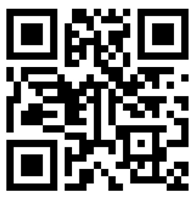
Papers must be submitted electronically via the online submission system: Microsoft CMT Link

If you encounter any problems during the submission process, please contact:
📧 icaset25@rayatbahrauniversity.edu.in

The Microsoft CMT service was used for managing the peer-reviewing process for this conference. This service was provided for free by Microsoft and they bore all expenses, including costs for Azure cloud services as well as for software development and support.
Scan for Submission

QR Code
Microsoft CMT Link

Conference Tracks

Track 1 - AI, ML & Virtual Reality
  • Machine Learning
  • NLP (Natural Language Processing)
  • IoT
  • Generative AI
  • Ambient Intelligence
  • Explainable AI
  • Deep Learning
  • Quantum Computing
  • Statistical Learning
  • Neural Network Learning
Track 2 - Blockchain & Cyber Physical Systems
  • Medical Monitoring Systems
  • Robotics Systems
  • Transportation Systems
  • Blockchain Security
  • Bitcoin Security
  • Distributed Ledger Technologies
  • FinTech
Track 3 - Info Security & Communication Technology
  • Internet Modeling
  • Information Security
  • Intelligent Agents
  • Green Technology
  • Communication Technology
  • Automation & Control
  • Knowledge Management
  • IoT
  • Sensor Networks
  • VLSI & Nano-Electronics
  • Remote Sensing and GIS
Track 4 - IoT & Communications
  • Biomedical Engineering
  • Smart Agriculture
  • Fog Computing
  • Cloud Computing
  • Edge Computing
  • Software Defined Networks
  • Communication Technologies
  • Wireless Sensor Networks
Track 5 - Advances in Healthcare Technologies
  • Biomedical Engineering
  • Healthcare Technologies
  • Wearable Devices & Sensors
  • Big Data & Analytics
  • Medical Imaging